Cat wall shelves & wall furniture
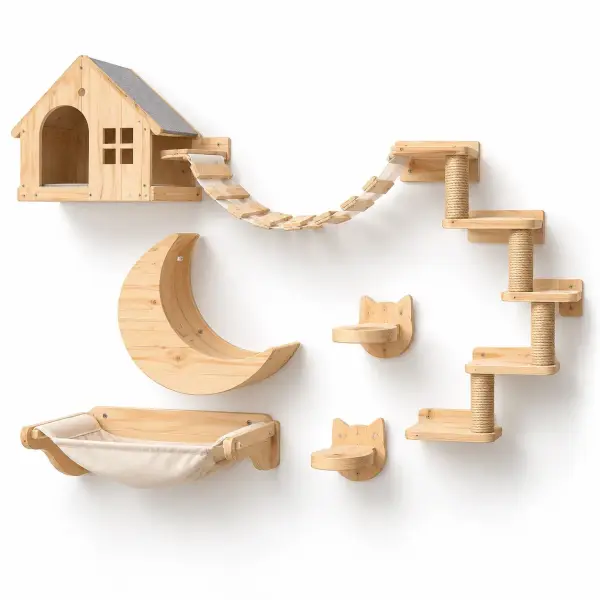
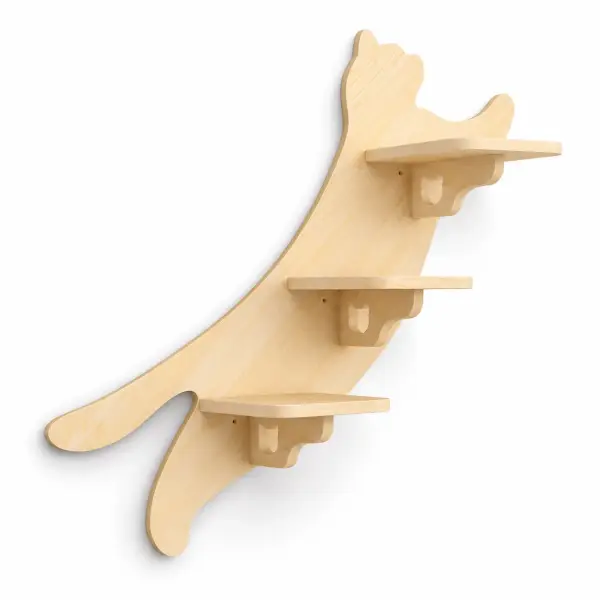
With a cat climbing wall, an empty wall becomes an adventure trail without sacrificing a square metre of floor. Combine steps, suspension bridges, caves, wall beds and scratching posts in light wood in whatever way suits your room and your cat’s temperament.
Why wall furniture works so well for cats
Cats experience a room in three dimensions. What is an empty wall to us is unused territory to them. Wall furniture creates routes upwards, lookout spots and retreats without cluttering the floor. Especially in small flats or in homes with a dog, it gives your cat an area of her own at a safe height.
Set or individual modules?
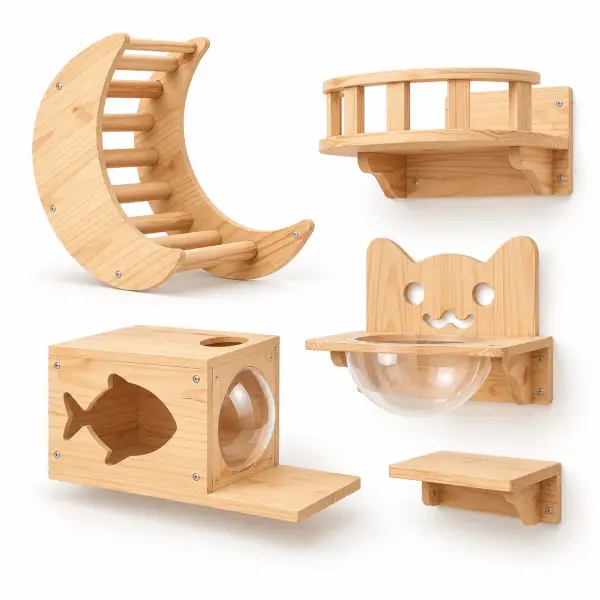
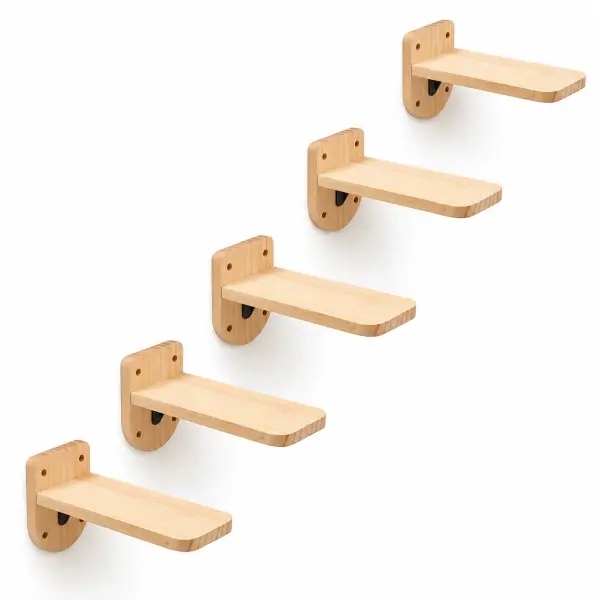
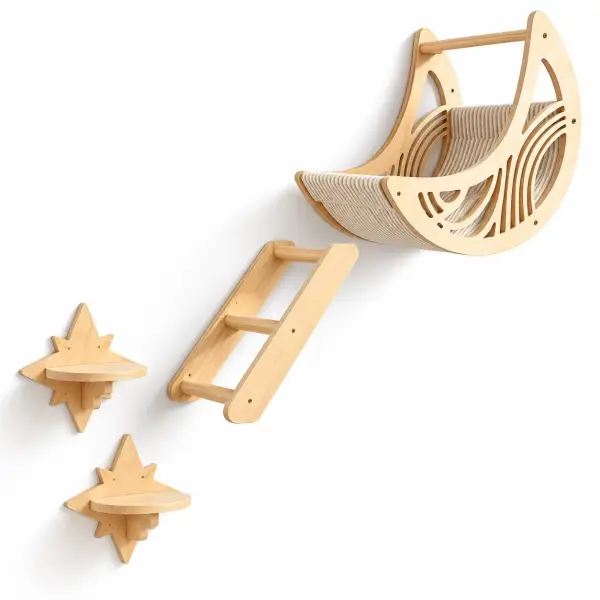
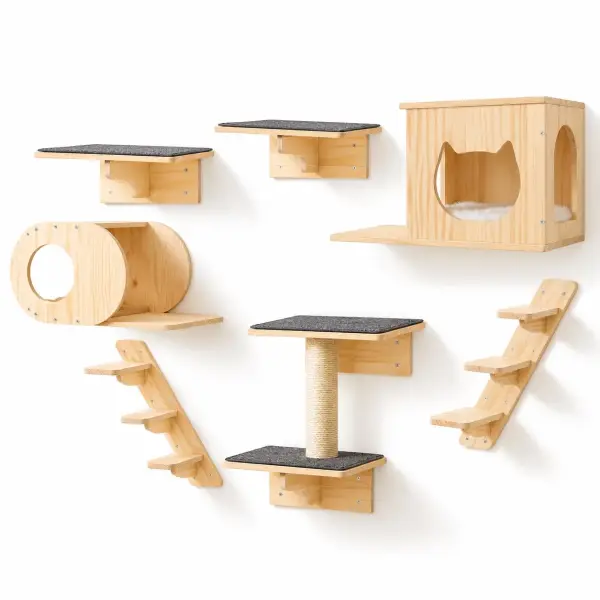
Complete sets such as the seven-piece pine climbing wall come with a cat house, climbing tube, stairs, scratching post and jumping boards; the jumping boards have non-slip felt pads. Individual modules let you start small and extend the wall bit by bit: suspension bridge, sisal stairs, half-moon climbing element, hammock with wooden arch or a cat house with a gabled roof. Playful shapes such as fish, cat head, moon or cloud, some with clear acrylic lying bowls, make the wall a real eye-catcher.
Planning: how to create a good climbing route
- Set the start and finish: Begin at a reachable height, for example from a sideboard, sofa or cat tree, and end at an attractive destination such as a wall bed or a house.
- Keep gaps small: Plan the gaps so that your cat climbs comfortably rather than making long jumps. For kittens, older or heavy cats, choose shorter steps.
- Create ways out: With several cats there should be no dead ends, so that nobody feels cornered.
- Test it on paper: Stick the outlines of the modules to the wall with masking tape before you drill.
Fitting: secure on the wall
Wall furniture is screwed on. The climbing wall set comes with fixing material for concrete, wood, tiled and brick walls. For plasterboard or an unclear surface, use suitable special wall plugs or ask a professional. Check where cables run before drilling and check the fixings regularly afterwards. After fitting, put firm pressure on each element by hand once before your cat uses it.
The key elements at a glance
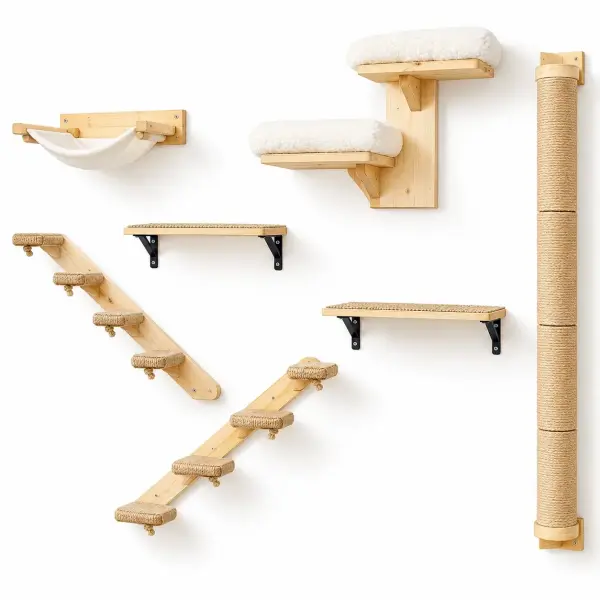
- Cat stairs for the wall: Steps wrapped in sisal give a grippy hold, and sherpa resting places invite a rest.
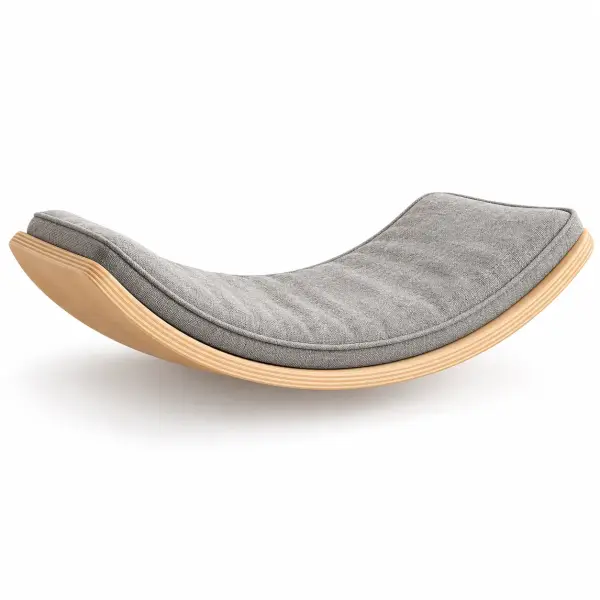
- Wall bed: The curved wall bed in bent laminated wood with a removable cushion in light grey or midnight blue wraps around the body like a hammock.
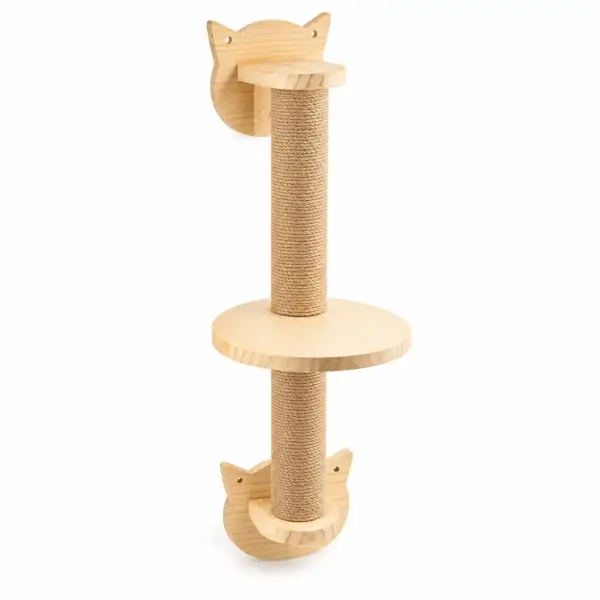
- Wall-mounted scratching post: a sisal scratching post with a round wooden plate and cat-head-shaped brackets, for a full-length scratch without needing floor space.
- Caves and houses: retreats up high for cats that like to watch without being seen.
Combining a climbing wall and a cat tree
A climbing wall doesn’t have to replace the cat tree. The combination works especially well: the cat tree serves as the entry point, and from its top platform the route continues over steps and bridges along the wall to the wall bed by the window. That creates a circuit that combines movement, scratching and resting.
Care
Wipe wooden surfaces with a damp cloth; cushions and padding with covers can be taken off. Clean acrylic bowls with a soft cloth so that no scratches appear. Worn sisal is a sign that the wall is being used.
To go with the climbing wall, scratching boards for horizontal scratching and window beds, which attach to the glass without drilling, are a good fit.
FAQs about Cat wall shelves & wall furniture
Can I combine the modules however I like?
Yes. The modules in our wall series can be chosen individually and combined freely. Plan the route so that your cat can climb comfortably, and test the arrangement with masking tape first.
Which wall is suitable for a climbing wall?
Ideally load-bearing walls of concrete, brick or wood. The 7-piece set comes with fixing material for concrete, wood, tiled and brick walls. For plasterboard you need suitable special wall plugs.
How much can a climbing wall take?
For the 7-piece pine set the manufacturer states a load capacity of up to about 18 kg. You'll find the details for the individual modules on each product page.
Is a climbing wall suitable for older cats?
Yes, if you keep the gaps small and plan steps instead of long jumps. Cat stairs with sisal steps are especially comfortable for cautious cats.
May I fit wall furniture in a rented flat?
That depends on your tenancy agreement. Drill holes usually have to be properly filled when you move out. If in doubt, check with your landlord beforehand.