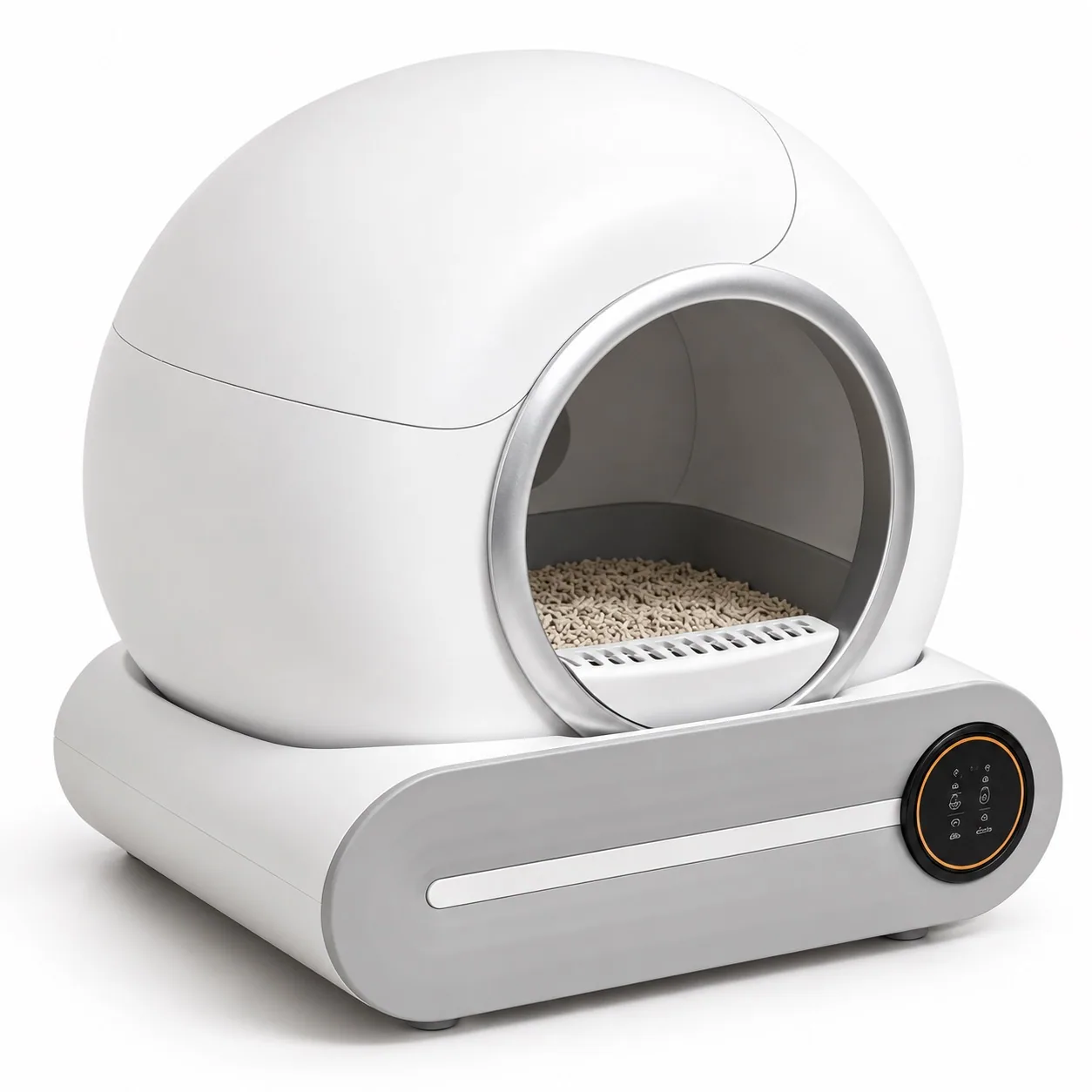
Hardly any task in life with a cat is as unpopular as daily scooping. A self-cleaning litter box promises to take over exactly that job. But who is such a machine really worth it for, what should you look out for and where are its limits? In this guide we explain honestly how the technology works, what pros and cons it has and how your cat can get used to it well.
How does a self-cleaning litter box work?
Most machines work on the same principle: after the cat has left the toilet, the machine waits a few minutes so that the litter can clump. Then the tray or drum rotates or tilts, a sieve separates the clumps from the clean litter, and the clumps fall into a waste drawer with a bag. The clean litter stays in the machine and is levelled out again.
Sensors are central to this. Weight sensors detect whether a cat is in the machine, and some models also use infrared sensors. Cleaning only starts when no cat is detected. Many machines can also be controlled via an app, which shows toilet visits and the fill level of the drawer.
The advantages
- No daily scooping: You only empty the waste drawer now and then.
- Always clean litter: Especially cleanly cats appreciate a toilet that is cleaned after every visit.
- Less smell in the room: Clumps disappear into a closed drawer instead of lying open for hours.
- A better overview: An app can show how often your cat uses the toilet. You notice unusual changes sooner and can discuss them with your vet.
- Relief in everyday life: If you work long hours, are out and about more often or don’t like bending down, you gain noticeable time and comfort.
The disadvantages, honestly considered
- Purchase price: An automatic machine costs many times as much as a classic litter tray.
- Electricity and space: You need a socket nearby, and the machines are much bigger than a simple tray.
- Suitable litter: It only works with suitable clumping litter.
- Noise: During cleaning you’ll hear the drum turning. If you’re sensitive, it’s better not to put the machine right next to the bed.
- Not every cat goes along with it: Very anxious cats need time, and some never accept the machine. So plan a calm settling-in period.
- Care is still needed: Even a self-cleaning litter box needs regular thorough cleaning.
Which cats is it suitable for?
Well suited are adult, healthy cats that use their toilet reliably. Be sure to check the manufacturer’s information on minimum age and weight. Our self-cleaning litter box with 65 L dome, for example, is designed for cats from 6 months and from about 1.5 to 8 kg. For kittens below the stated limits, a classic litter tray is the right choice.
For very large breeds, please compare the opening and the interior with your cat. For very light cats, a manual mode can make sense, in which the machine only records and you start the cleaning yourself by button or app.
Hooded or open?
Closed models with a dome keep odour and litter better inside and offer cats a sheltered spot. Some cats avoid hoods, however, and want to keep an overview while they use the toilet. For them there are open machines. Our open automatic cat toilet has a wide, bowl-shaped tray, a 10.5 L drawer, weight and infrared sensors and is designed for cats from 1.5 to 12.5 kg. A litter mat, scent dispenser, brush and bags are included.
How your cat has liked to go to the toilet so far is the best clue: if she gladly uses a hooded toilet, a dome is the obvious choice. If she avoided the hood of the old toilet, choose an open model. You’ll find all the machines in our self-cleaning litter boxes collection.
The right cat litter
No self-cleaning litter box works without clumping litter, because the sieve can only sort out solid clumps. For our 65 L model, fine-grained tofu, bentonite, mineral or mixed litter are suitable. Silica or crystal litter and very long pellets are not suitable. Follow the information in your machine’s instructions and only fill the litter up to the marked line, otherwise the mechanism can’t work properly.
Settling in step by step
- To begin with, place the new machine switched off next to the familiar toilet.
- Add some used, familiar litter from the old toilet so that your cat finds her own scent again.
- Let your cat explore the machine in peace. Reward curiosity with praise or a treat.
- Only switch on the automatic mode once your cat uses the machine regularly.
- Only remove the old toilet once everything works reliably.
Give your cat time. Pressure or a sudden switch makes it more likely that she’ll look for a different place.
Multi-cat households: what to bear in mind?
In homes with several cats, a self-cleaning machine is naturally used more often, and the drawer fills faster. A common rule of thumb is one toilet per cat and one extra. Even with automation it makes sense to offer at least a second toilet, so that no cat has to wait or is pushed out by another. A classic stainless steel toilet or a large tray from our litter trays collection is a good addition for this.
Care and cleaning
- Waste drawer: empty it as soon as the app or control panel indicates it; change the bag.
- Litter: top up regularly so that the fill level is right.
- Thorough cleaning: at regular intervals change the litter completely and clean removable parts according to the instructions.
- Electronics: protect sensors and power supply from water; only wet-clean the parts approved by the manufacturer.
- Litter mat: A double-layer mat in front of the entrance catches granules from the paws before they travel around the home.
What to look out for when buying
- Dimensions and opening: Does the machine fit the planned spot, and can your cat get in comfortably?
- Weight range: Do all the cats in your household fall within the manufacturer’s information?
- Sensors: Weight sensors and, where applicable, infrared sensors should stop the cleaning as soon as a cat is detected.
- Operation without internet: Check whether the automatic mode also works without wifi. Many apps need a 2.4 GHz network.
- Drawer size: The bigger, the less often you need to empty it.
Our conclusion
A self-cleaning litter box isn’t a must, but for many households it’s a real relief. It’s especially worth it if your cat is adult and healthy, you have a socket and enough space and you’re prepared to switch to clumping litter. Plan for a patient settling-in period and choose between hooded and open form according to what your cat has liked so far. Do you have questions about a machine? Write to us and we’ll answer honestly.