The right cat carrier is big enough for your cat to sit comfortably and turn around in, and light enough for you to carry without effort. It has good ventilation and an opening that suits your cat: usually from the top for shy animals, and from the front or side for curious ones. Which type is right depends mainly on weight, temperament and purpose: a short trip to the vet or a longer journey.
In this guide we compare a bag, a foldable box and a backpack with a viewing window, explain size and ventilation, and show you how to get your cat used to being carried, step by step. You will find an overview of suitable models in our collection Cat carriers.
Which cat carrier to choose: the three common types
In everyday life you will come across essentially three designs. Each has strengths and limits, and none is ideal for every cat.
Soft carry bag
The bag is the classic for vet visits and short trips. It is light, easy to stow in the car and usually has mesh windows for fresh air. One example is the soft carry bag with mesh windows: it has mesh windows on the top, front and sides, two openings (top and side), a padded handle and a removable shoulder strap. It comes in three sizes, recommended for cats up to approx. 3, 5 or 7 kg.
Foldable box
If you are short on storage space, you will appreciate a box that folds flat. The foldable EVA box with air holes and mesh door has rigid walls, air holes all round and a round mesh door with a zip. At approx. 45 × 38 × 32 cm it is generously sized. Rigid walls are handy when the box sits on the car seat or in the footwell and should not get squashed.
Backpack with viewing window
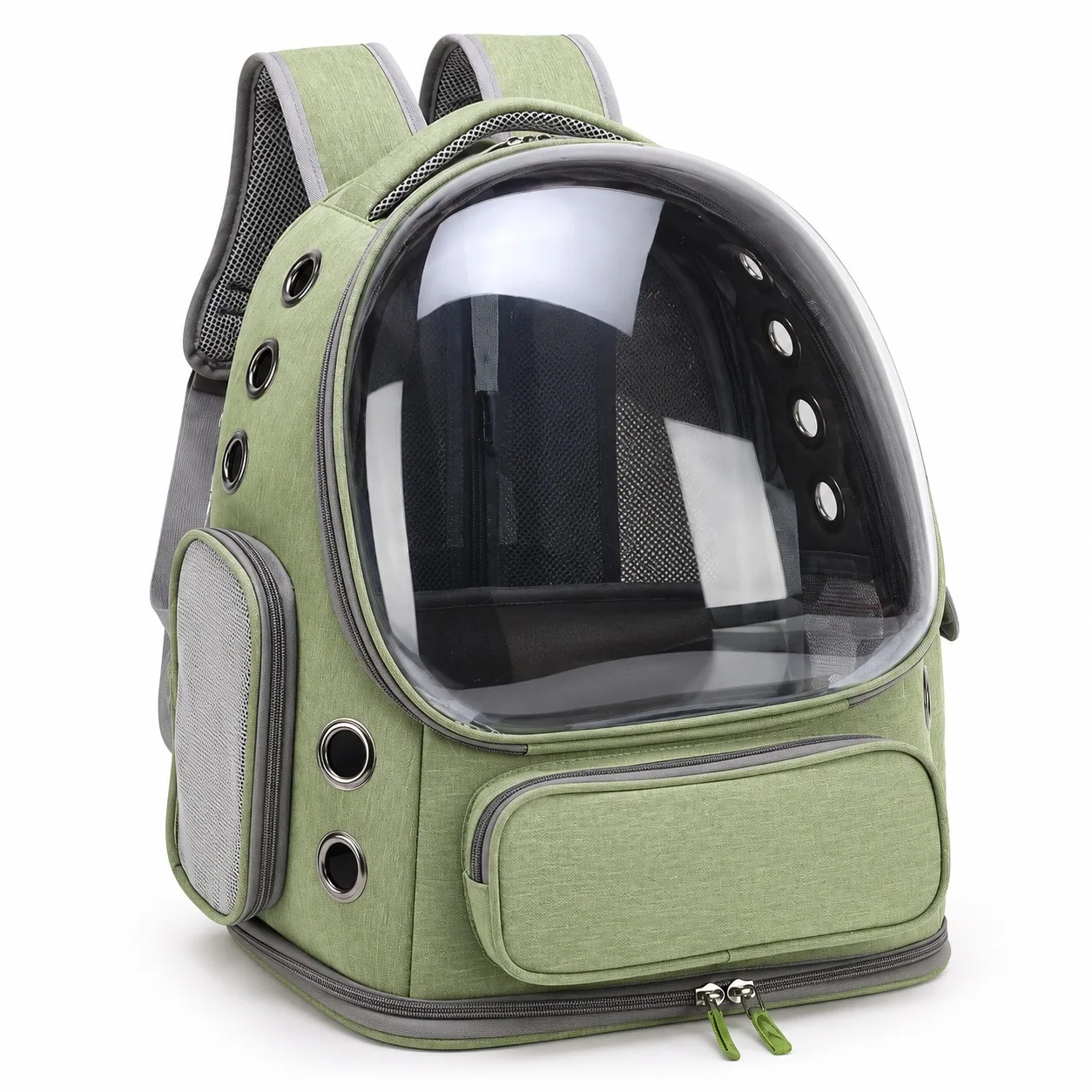
The backpack keeps your hands free, for example when you are climbing stairs, wheeling a bike or opening doors. Many cats are more relaxed in it because they can look out. Models with a dome or window, such as the cat backpack with viewing window in a linen look, have air holes and mesh windows on both sides, plus padded straps with a chest strap. You will find more choice under travel accessories.
Which type suits which situation?
| Type | Particularly suitable for | Strengths | Things to consider |
|---|---|---|---|
| Soft carry bag | Vet visits, car journeys, everyday use | Light, often opens from the top and side, shoulder strap | With very anxious cats, the bag should be secured in the car |
| Foldable box | Little storage space, occasional trips | Rigid, stores flat, plenty of air | Bulkier to carry over longer distances |
| Backpack with viewing window | Curious cats, journeys on foot, stairs | Hands free, visual contact, padded straps | Check your cat’s weight and how the straps fit beforehand |
| Expandable bag or backpack | Longer journeys with breaks | More room to lie down at stops | Only open the extension in a safe environment |
The right size and weight
The carrier should be sized so that your cat can sit upright, turn around and lie down comfortably. Too small is uncomfortable, while too big lets the animal slide about when it moves. Measure your cat lying down and sitting, and compare the measurements with the model’s specifications.
Also note the recommended weight limit. For the soft carry bag with mesh windows it is approx. 3, 5 or 7 kg depending on size, and for the backpack with two side doors up to 7.5 kg. It is best to weigh your cat shortly beforehand. With sturdy breeds, consider going up a size, but only if the carrier does not become heavy and unwieldy as a result. Think of yourself too: a cat plus carrier quickly weighs more than you expect, and a padded handle or wide straps make all the difference.
Ventilation and visibility
Cats need fresh air, especially in warm weather and in closed vehicles. Look for air holes or mesh panels on several sides, not just one. Mesh lets air through well, and the cat keeps contact with its surroundings. Some animals find that calming, while others feel safer without a view. With a light cloth over part of the carrier you can try both. Never leave the carrier in the sun or in a heated-up car.
Entry: from the top, front or side
- From the top: Ideal for shy cats and at the vet. You lift the cat in or out without pushing it through a narrow opening.
- From the front: Handy for curious cats that go in of their own accord. Less nice if an anxious cat does not want to come out.
- From the side: With the cat backpack with two side doors you can let your cat in from the left or right, which helps in tight spaces.
Models with two openings are the most flexible. That way you can choose how to put your cat in and take it out again, depending on the situation.
Getting your cat used to the carrier
Most problems arise when the carrier is only used for the vet. Cats then quickly associate it with stress. A calm, gradual build-up works better:
- Put the carrier out, open, in the living space a few days or weeks beforehand so that it becomes a normal part of the surroundings.
- Place a soft blanket and an item of clothing your cat knows inside. You will find a selection of resting places among our cat beds.
- Tempt your cat in with treats or a toy and praise it calmly.
- At first close the carrier only briefly, then carry it a few steps around the home.
- Build up slowly: first indoors, then to the car, later short trips that do not end at the vet.
With a backpack, you should also practise carrying: adjust the straps properly, fasten the chest strap and to begin with only walk short loops. If your cat seems permanently very stressed, talk to your vet if in doubt.
Vet visits and travel
For a vet visit, what matters most is that the cat can get in and out easily. A bag with an opening on top makes the examination easier, because the cat can stay in the carrier while you open the door or lid. A wipe-clean interior helps if there is ever an accident.
For longer journeys, breaks are important. An expandable travel bag with fleece mat offers twice the space to lie down at stops thanks to fold-out mesh sides. If you prefer a backpack, the expandable cat backpack with mesh extension also gives extra room during breaks, plus a side pocket for a water bottle. Only open extensions in a safe, enclosed environment, and also put your cat on a lead for breaks outdoors. In the car, the carrier should be secured, for example in the footwell or with the seat belt, so that it does not slide about when you brake. You will find more ideas in our collection Cats.
Checklist before you buy
- Noted your cat’s weight and body size?
- Checked the model’s weight limit and internal dimensions?
- Ventilation on at least two sides?
- Entry from the top or side possible?
- Zips and fasteners sturdy and hard for cat paws to open?
- Material wipe-clean and the base sturdy enough?
- Handle or straps padded and comfortable for you?
- Room for a blanket or cushion?
- Can the carrier be fastened securely in the car?
- Have you allowed time for getting your cat used to it?
Frequently asked questions
How big should a cat carrier be?
Your cat should be able to sit upright, turn around and lie down comfortably in it. The carrier must not be so big, though, that the animal slides back and forth when it moves. Also check the model’s recommended weight limit.
Bag or backpack: which is better?
That depends on your cat and how you will use it. A bag is light and simple for the vet and the car. A backpack is handy if you walk a lot and need your hands free, and it often has a viewing window. Try what your cat is more likely to accept.
How do I get my cat used to the cat carrier?
Put the carrier out open in your home, place a blanket inside and reward your cat for every time it goes in of its own accord. Then close the carrier briefly, carry it a few steps and build up slowly. If your cat is very stressed, ask your vet.
Is a viewing window good for cats?
Some cats are calmer with a view outside, while others feel safer without one. A light cloth over parts of the carrier helps you try both. Whatever you choose, enough ventilation is essential.
Can I carry two cats in one carrier?
We do not recommend it. Stress can lead to fights, and space quickly becomes too tight. Each cat should have its own suitable carrier.
If you are unsure which model suits your cat, just write to us. We will tell you honestly what fits in terms of size and weight, even if that means another model is the better choice.